
What Happens in Couples Counselling?
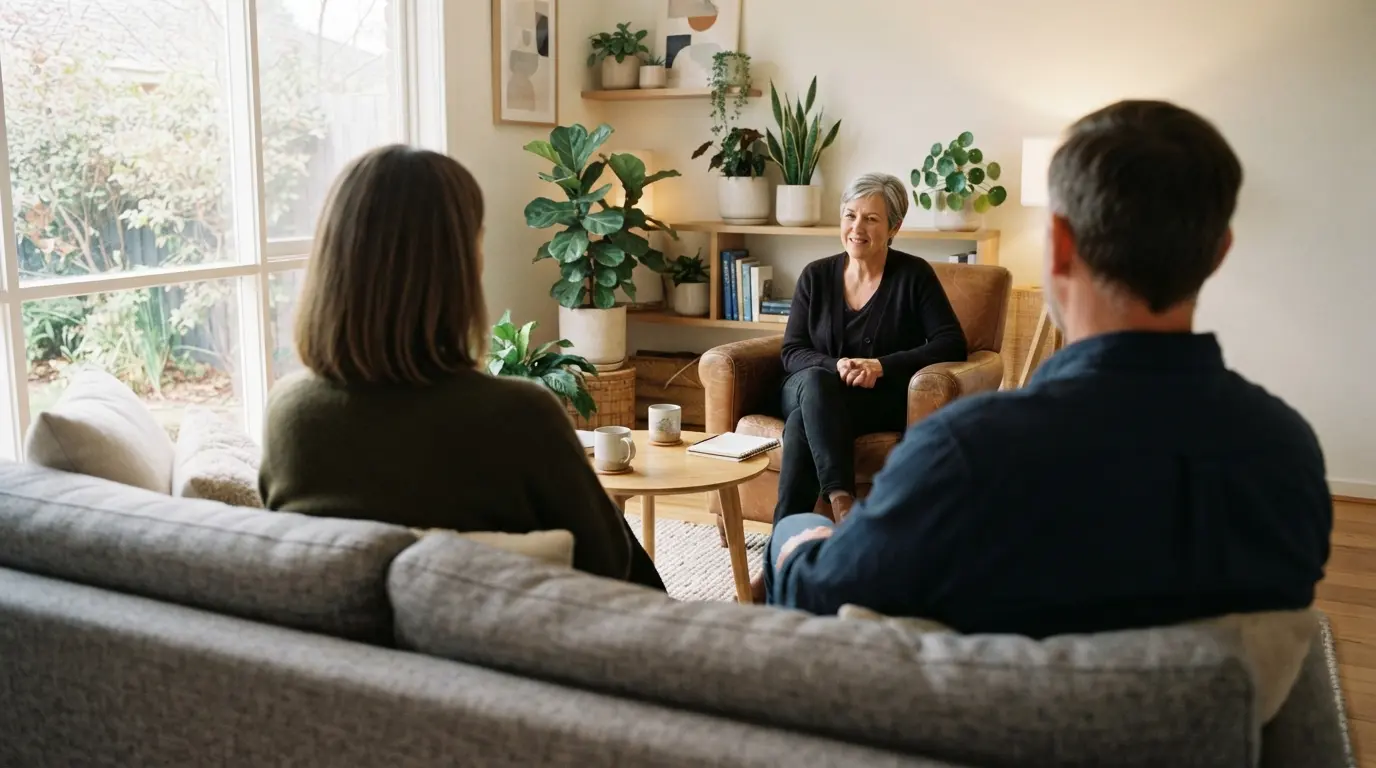
Unsure what happens in couples counselling? Learn what occurs in the first session, how tools work, and when to start. Book your session in Narangba.
Knowing what happens in couples counselling helps remove the dread of entering the room. During sessions, you and your partner sit with a neutral therapist to identify unhelpful arguments, express underlying feelings, and build practical communication skills. The therapist does not take sides or assign blame. Instead, they guide you through structured conversations to repair your bond.
Key Takeaways
The counsellor treats the shared interaction pattern rather than picking a side.
Your initial appointment maps relationship history, shared goals, and individual safety.
You learn practical tools like structured time-outs, cycle tracking, and active listening.
Joint counselling pauses immediately if there is ongoing coercive control or active abuse.
Most couples work within an initial framework of 8 to 12 sessions.
What Is Couples Counselling and How Does It Work?
Couples therapy is a clinical service designed to help partners resolve conflict and rebuild emotional connection. Many people assume booking an appointment means a relationship has failed. Long-term studies from The Gottman Institute show that partners often wait an average of six years from the onset of distress before getting professional help. Addressing issues early stops daily friction from turning into entrenched distance.
The therapist provides an objective, structured room where neither person is judged. Rather than acting as a referee, the clinician watches how you speak to each other in real time. This makes it possible to catch the defensive habits that derail everyday conversations.
Clinical work draws on established relationship therapies:
Emotionally Focused Therapy (EFT): Developed from attachment research at the International Centre for Excellence in Emotionally Focused Therapy, this model views distress as emotional disconnection. It helps partners identify underlying fears and rebuild trust.
The Gottman Method: Based on decades of observational research, this approach helps couples spot destructive patterns such as criticism, contempt, defensiveness, and stonewalling.
Imago Relationship Therapy: Pioneered by Imago Relationships Worldwide, this method uses three-step dialogues (mirroring, validation, and empathy) to calm defensiveness during tough talks.
What Happens in Couples Counselling During Your First Session?
Walking into the clinic for the first time can feel uncomfortable. Standard intake appointments run for 50 to 60 minutes, matching recommendations from the Australian Psychological Society. This first block focuses on practical boundaries and background information.
The therapist sets ground rules so both partners know what to expect. This includes explaining confidentiality, clinic policies, and how the therapist handles individual disclosures. Clarifying these rules upfront ensures neither partner feels caught off guard later on.
The rest of the session covers your history as a couple. The therapist asks how you met, what originally brought you together, and when your main arguments began. Each person shares their view on what feels most broken right now so you can agree on clear goals for upcoming sessions.
Most intake sessions involve both partners together. If the therapist needs to schedule a short individual check-in, they only do so when both partners agree and it serves a clear purpose.
Inside Ongoing Sessions: The Clinical Workflow
Regular sessions move past relationship history and focus on practical interventions. Instead of debating the details of every home argument, sessions follow four clear stages:
Phase 1: Tracking the Pursue-Withdraw Loop
Distressed relationships often fall into a predictable trap. One partner presses for answers, while the other feels cornered and pulls away. This dynamic leaves both people feeling isolated. The therapist slows the conversation down to show you how this cycle works, treating the pattern itself as the problem rather than either person.
Phase 2: Managing Physiological Flooding
Arguments trigger automatic physical reactions. When conflict escalates, your heart rate can climb above 100 beats per minute. Clinical research indexed in PubMed shows that this state, called physiological flooding, shuts down clear listening and triggers fight-or-flight reactions. Therapists watch for these physical signs and pause the conversation for 20 minutes so stress hormones can clear.
Phase 3: Practising In-Session Dialogue Tools
Once both partners are calm, the session shifts to structured speaking exercises:
Speaking with "I" statements to describe personal feelings without assigning blame.
Using reflective listening by repeating a partner's point before sharing a counterpoint.
Agreeing on neutral phrases that allow either person to pause an argument at home without walking out.
Phase 4: Between-Session Homework
Therapy only works if the tools carry over into daily life. Between visits, couples receive targeted exercises:
Setting aside one phone-free, 20-minute check-in each week.
Noting specific moments where your partner made an effort to help.
Using your agreed time-out rule during unexpected disagreements.
Common Misconceptions About Relationship Therapy
Assumptions about what happens behind closed doors can stop people from seeking support. Looking at the reality of the process helps clear up these concerns.
The Counsellor Will Tell You to Separate
Therapists do not tell couples whether they should stay together or part ways. Their role is to help you understand your options and communicate clearly. If a couple decides that separating is the healthiest step forward, the therapist helps them manage that transition respectfully.
A Reluctant Partner Ruins the Process
Data in the Journal of Marital and Family Therapy shows that 30% to 50% of couples enter counselling with uneven motivation. Hesitant partners usually worry they will be blamed for all the relationship issues. A good practitioner addresses these fears directly and makes sure both voices carry equal weight.
Therapy Drags on for Years
Most couples work toward clear, practical goals rather than staying in open-ended therapy. Practice guidelines from the Australian Association of Social Workers note that short-term modalities often resolve primary relationship conflicts within 8 to 12 sessions. You review progress regularly and taper session frequency as things stabilise.
Costs, Session Length, and Scheduling
Consultations generally last 50 to 60 minutes. Couples usually book weekly sessions during the first month to build momentum, then shift to fortnightly appointments as they start using the tools independently.
Relationship counselling in Australia is an out-of-pocket expense. Guidance from the Department of Health and Aged Care specifies that Medicare Mental Health Treatment Plans cover individual mental health diagnoses, not relationship therapy. Many private health funds provide extras rebates for counselling, depending on your policy. Prices are on our fees and rebates page.
When Couples Counselling Is Not the Right Fit
Joint counselling requires an environment where both people can speak honestly without fear of repercussions once they leave the clinic. Certain situations make joint sessions unsafe.
Joint therapy is unsuitable when there is ongoing family violence, intimidation, or control. If one partner controls the other, read how to recognise and heal from coercive control first. When safety is compromised, seeking confidential individual support through 1800RESPECT must always come before joint relationship work.
Counsellors also pause joint therapy when an unmanaged addiction or acute personal crisis prevents a partner from taking part safely. In those cases, individual medical or psychological care must happen first.
Frequently Asked Questions
What happens in couples counselling if one person will not talk?
Quietness or withdrawal is treated as useful clinical information. Therapists help quieter partners share their thoughts at a manageable pace without letting the more vocal partner dominate the conversation.
Can we attend relationship therapy online?
Yes. Telehealth platforms let partners join from home or log in from separate locations if work or family commitments make travel difficult.
What should we bring to our initial appointment?
You do not need to bring documents, journals, or notes. The only requirement is arriving willing to speak honestly about what is happening at home.
Ready to Strengthen Your Relationship?
Our couples counselling in Narangba gives both partners a neutral space to be heard. We support couples from across the Moreton Bay area, including North Lakes, Burpengary, and Morayfield, who want to break repetitive arguments and rebuild their connection.
Book Your Initial Consultation