
What Does a Counsellor Do?
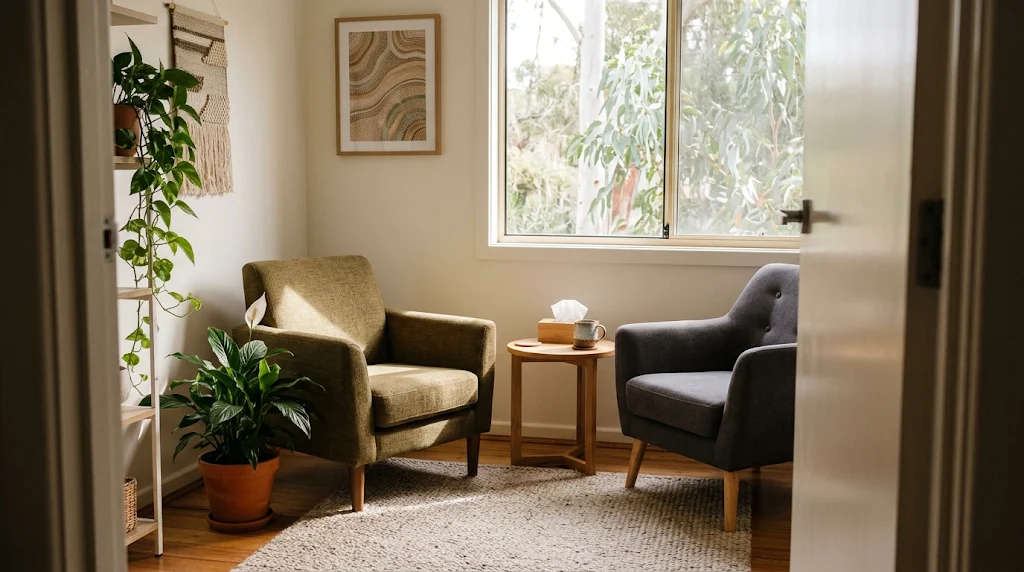
Wondering what does a counsellor do in real sessions? Learn how talk therapy works in Australia and book support in Narangba or online.
A counsellor offers regular talk therapy to help you work through stress, grief, trauma, relationship problems and life changes. When people ask what does a counsellor do, the direct answer is straightforward: we provide a private room where you can sort through difficult thoughts and build practical coping strategies. You set the direction of your goals while receiving steady clinical support.
Key Takeaways
A counsellor listens without judgement and helps you build practical coping strategies instead of telling you how to run your life.
Registered counsellors focus on emotional support and behaviour change, while psychologists and psychiatrists handle formal medical diagnoses and medication.
You do not need a GP Mental Health Treatment Plan to book a private session in Narangba or by telehealth.
Qualified Australian practitioners register with the ACA or PACFA and complete mandatory ongoing supervision.
What a Counsellor Helps With
Many people wait until daily life feels unmanageable before booking an appointment. Yet routine counselling supports people across North Brisbane, Moreton Bay and wider Australia through sudden crises and slow-building strain alike.
Figures from the Australian Bureau of Statistics National Study of Mental Health and Wellbeing show that 21.5% of Australians aged 16 to 85 experienced a 12-month mental disorder in recent reporting. Anxiety disorders alone affect 17.2% of adults each year, leaving millions of people carrying heavy emotional loads alongside work and family duties.
In my practice, saying hard things out loud in a confidential space often brings immediate relief. Rather than giving a generic lecture, a counsellor helps you slow down and work through specific pressures:
Chronic stress and burnout, including spotting the daily triggers draining your energy and setting realistic limits at home or work.
Grief, loss and major transitions, such as bereavement, separation, career changes, retirement or children leaving home.
Relationship and family strain, focusing on clearer communication habits, rebuilding trust and handling parenting stress with calmer responses.
Trauma recovery and nervous system regulation, where you learn how past distress affects your body today and practise grounding habits to support calm in daily life.
What Happens in a Counselling Session
Sitting in a therapy room for the first time can feel uncomfortable when you do not know the format. Forget the old television cliché of lying on a leather couch while someone scribbles silently. Modern sessions are active, two-way conversations grounded in your daily routine.
Your Initial Consultation and Informed Consent
During your initial consultation, we focus on hearing your story and what brought you in. We go through informed consent together so you understand how sessions run, what the fees are and how your privacy is protected before any therapy begins.
Early in that first visit, we also work on collaborative goal setting. Rather than handing you a rigid checklist, I ask what you want to feel different in your life over the next few weeks. Having a clear target stops appointments from turning into aimless venting.
Ongoing Sessions and Evidence-Informed Tools
Each appointment runs as a 50-minute session, leaving ten minutes afterwards for clinical notes and case review. Depending on your situation, a counsellor draws from evidence-informed methods listed by Healthdirect Australia's guide to counsellors and counselling, including person-centred therapy, cognitive behavioural therapy, acceptance and commitment therapy and trauma-informed care.
Active listening sits at the centre of every visit. Instead of handing out quick advice, we examine unhelpful thought loops, practise nervous system regulation exercises and test realistic coping strategies between appointments. When a tool does not suit your routine, we drop it and try another approach.
Privacy and Confidentiality Limits
Everything you say in the room stays private, which lets you speak honestly without worrying about family gossip or workplace fallout. Australian ethical standards set clear confidentiality limits, and we explain those boundaries from day one.
Under the rules set by the Psychotherapy and Counselling Federation of Australia, a counsellor can only break confidentiality if there is an immediate risk of serious harm to you or another person, or if a court order or mandatory reporting law requires disclosure. Outside those rare legal exceptions, your records remain strictly protected.
Counsellor, Psychologist or Psychiatrist
Understanding what does a counsellor do becomes much easier when you compare the three main mental health professions in Australia. Each role covers a distinct area of care, and knowing the difference saves you time and money.
Differences in Scope of Practice and Diagnosis
A registered counsellor holds accredited tertiary qualifications in counselling and focuses on talk therapy, emotional processing and practical life skills. Under Australian clinical standards, a counsellor works within a non-diagnostic scope of practice, meaning we do not give a formal medical diagnosis or write prescriptions.
An AHPRA-registered psychologist completes at least six years of university study and supervised practice in human behaviour, cognitive testing and clinical assessment. Psychologists diagnose mental health conditions and provide structured psychological therapies.
A psychiatrist is a medical doctor with specialist training in psychiatry. Because they hold a medical degree, psychiatrists assess biological factors, diagnose complex psychiatric illnesses and prescribe or adjust medication.
Referrals and Funding Pathways
According to the Australian Institute of Health and Welfare Medicare mental health data, 10% of Australians accessed Medicare-subsidised mental health services in 2024–25, with 96% delivered outside hospital settings. Those Medicare rebates require a GP referral and a Mental Health Treatment Plan, which covers psychologists, accredited mental health social workers and psychiatrists.
Private counsellors generally sit outside the standard Medicare Better Access scheme, though several Australian private health funds pay extras rebates for eligible registered counsellors. You do not need a doctor's referral, you avoid long waitlists and your appointments do not appear on a permanent medical record.
If you are still deciding which option fits your needs, read our comparison of a counsellor vs psychologist. When diagnostic testing or medication review is needed alongside talk therapy, I regularly coordinate with local GPs and specialists.
How to Choose a Counsellor
In Australia, the title "counsellor" is self-regulated rather than controlled by AHPRA, so checking a practitioner's credentials matters before you book. Workforce figures from Jobs and Skills Australia show that 72.9% of Australian counsellors hold a bachelor or postgraduate degree, and verifying national membership confirms they follow enforceable ethical codes.
When checking a practitioner in Queensland or elsewhere in Australia, look for four practical standards:
Current registration with the Australian Counselling Association (ACA) or the Psychotherapy and Counselling Federation of Australia (PACFA).
Mandatory ongoing professional supervision with a senior clinician, alongside annual continuing education, to keep clinical judgement safe and accountable.
Clear fee schedules, cancellation terms and privacy policies explained before your first appointment.
Personal comfort in the room, as feeling heard and respected by your practitioner directly shapes how well therapy works.
Counselling in Narangba
Seeing a local practitioner close to home removes the extra strain of driving into central Brisbane when you already feel stretched thin. Our clinic is located in a quiet residential street in Narangba in the Moreton Bay region, welcoming people from Burpengary, North Lakes, Kallangur, Caboolture and nearby suburbs.
Appointments are available face to face at 6 Thirlestane Terrace, Narangba QLD 4504, or from home via secure telehealth across Australia. You can call 0423 139 352 or send an enquiry through our contact page if you have questions before booking.
If you want support with stress, grief or trauma, book counselling for adults with Alison in Narangba or by telehealth.
Frequently Asked Questions
Do I need a GP referral to see a counsellor in Australia?
No, you do not need a referral from your doctor to book an appointment with a private counsellor. You can contact our Narangba clinic directly to arrange an in-person or telehealth visit without seeing a GP first.
Can a counsellor diagnose a mental health condition or prescribe medication?
No. Counsellors provide non-diagnostic talk therapy, emotional support and practical coping strategies. When a formal medical diagnosis, clinical testing or prescription medication is needed, we coordinate care with your GP, a psychologist or a psychiatrist.
How many counselling sessions will I need?
The number of sessions depends on your goals and what you are working through. Some people find three to six sessions enough to work through a specific decision or workplace issue, while grief support or deeper trauma recovery often runs over several months.
Is what I say to a counsellor completely confidential?
Yes, sessions are private and bound by strict ethical codes. A counsellor will only share information if there is an immediate safety risk to you or another person, or if required by Australian law.
Ready to Take the First Step?
You do not have to carry stress, grief or life changes alone when steady support is close by.