
Does Couples Counselling Work?
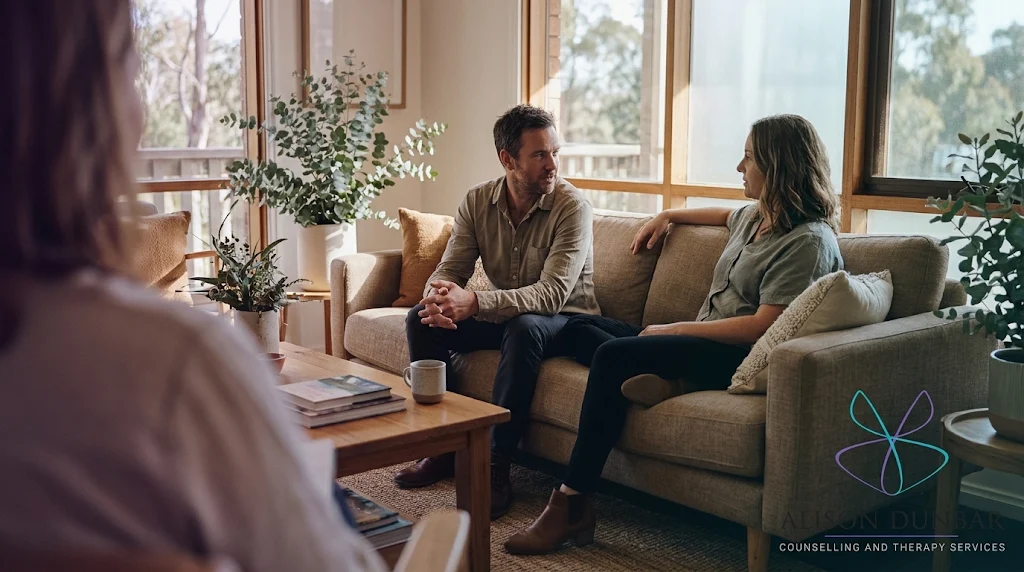
Wondering if couples counselling really helps? Read the clinical research, learn what shapes progress, and see how to book your first session in Narangba.
Couples counselling can help partners communicate better and rebuild trust, but results depend on both people taking part. Clinical research shows that roughly 60% to 80% of distressed couples report meaningful gains in relationship satisfaction when they take part in structured therapy. Real progress means learning safer ways to handle conflict rather than avoiding disagreements altogether.
Key Takeaways
Controlled trials show 60% to 80% of couples improve, while everyday community practice sees around 55% improve or stabilise.
Couples who seek support within two years of recurring trouble, before contempt becomes automatic, achieve much higher recovery rates.
Shared commitment, mutual accountability, and between-session practice matter more than any single therapy model.
Joint sessions are unsafe and unsuitable when coercive control, intimate partner violence, or an undisclosed ongoing affair is present.
What Couples Counselling Can Help With
Many people hesitate to book an appointment because they picture a therapist acting like a courtroom referee who decides who is right. In our clinical work, therapy operates the opposite way. We provide a neutral, non-judgemental space where both partners can slow down reactive arguments and feel heard.
Breaking Repetitive Arguments and Pursue-Withdraw Cycles
Most couples do not fight because they lack basic communication skills. Instead, strong emotions take over during stressful moments and make listening difficult. One common pattern in the therapy room is the pursue-withdraw cycle, where one partner pushes for answers out of anxiety while the other shuts down to avoid conflict.
When couples counselling works well, it helps you spot this loop as it happens. Rather than repeating the same argument on a Tuesday night, you learn how to pause, lower the tension, and share the softer feelings beneath the frustration. Research from the American Association for Marriage and Family Therapy found that 93% of surveyed clients gained better tools to manage conflict.
Rebuilding Emotional Safety and Connection
Once repetitive arguments calm down, couples have room to address the distance that builds up during busy seasons of life. Parenting pressures, work demands, and financial strain across Moreton Bay and North Brisbane can quietly push partners into living like polite housemates who manage household tasks well but rarely connect emotionally.
Structured sessions aim to rebuild emotional safety so both people can voice worries or past hurts without fear of blame or stonewalling. Simple daily habits, such as a calm 20-minute stress-reducing check-in, can gradually restore warmth and trust.
Improving Daily Teamwork and Personal Wellbeing
Ongoing relationship distress rarely stays confined to your partnership alone. Peer-reviewed clinical reviews published via the National Library of Medicine confirm a two-way link between relationship conflict and low mood. When you reduce daily hostility and improve conflict resolution at home, individual anxiety and depressive symptoms often ease as well.
What Affects the Results
A meta-analysis of 58 studies in the Journal of Consulting and Clinical Psychology found a large overall gain in relationship satisfaction for treated couples compared to those on a waitlist. Across clinical studies, roughly 33% to 50% of couples achieve full clinical recovery, crossing out of the distressed range, while another 18% to 35% make reliable partial gains.
In everyday community clinics, outcomes are slightly more modest, with about 55% of couples improving or stabilising, according to naturalistic clinic research in the Journal of Marital and Family Therapy. Several clear factors explain why results vary from couple to couple.
Seeking Support Before Resentment Hardens
You may have heard the popular claim that couples wait six years before asking for help. Empirical tracking of help-seeking couples published in the Journal of Marital and Family Therapy found the actual average delay is 2.68 years, with most people booking within two years of recurring trouble.
Early intervention plays a major role in your outcome. Couples who enter counselling while warmth and goodwill still exist achieve recovery rates near 80%. Waiting until contempt, bitterness, and prolonged silent treatments become automatic makes repair much harder.
Shared Commitment and Mutual Accountability
Therapy stalls if one partner attends purely to prove the other person wrong. Clinical outcome research in the Journal of Consulting and Clinical Psychology shows that when both partners enter with aligned goals to repair the relationship, separation rates at six months sit around 7.8%. When partners arrive with clashing agendas, that figure climbs to 45%.
Strong results depend on mutual accountability. Both people need to ask, "What is my part in this pattern?" rather than waiting for their partner to change first.
Evidence-Based Approaches and Between-Session Practice
Evidence-informed frameworks give sessions a clear direction instead of endless venting. Two well-researched methods are Emotionally Focused Therapy, which focuses on strengthening attachment bonds and emotional responsiveness, and the Gottman Method, which aims to build friendship and replace criticism or defensiveness with calmer startups.
Even a strong therapeutic alliance will not create lasting change if insights stay inside the clinic room. Long-term follow-up research in the Journal of Consulting and Clinical Psychology shows that roughly half of treated couples maintain significant gains five years later, largely because they continue applying repair routines during everyday stress at home.
When Couples Counselling May Not Be the Right Step
Honest clinical care also means recognising when joint sessions are unsafe or unproductive. In certain situations, pausing couples work to focus on individual safety or personal stability is the right choice.
Safety Concerns, Coercive Control, or Abuse
Joint counselling relies on open vulnerability and equal voice. When intimate partner violence, intimidation, or coercive control is present, sitting in the same room can place the targeted partner at greater risk after the session ends.
In any situation involving fear or control, individual safety planning must come first. Seeking confidential individual counselling for adults gives you a private space to receive support without pressure or retaliation.
Undisclosed Ongoing Affairs or Untreated Addiction
Couples can recover from past infidelity when both partners commit to full transparency and repair. However, if an undisclosed affair is still active, joint therapy usually stalls because one partner is operating from a hidden agenda. Similarly, severe untreated substance misuse or an acute mental health crisis generally requires targeted individual treatment before relationship work can succeed.
When Only One Partner Wants to Attend
It is common for one person to feel ready for support while the other feels hesitant or sceptical. If your partner refuses to attend, you do not have to stay stuck in the same cycle. Starting individual therapy on your own helps you clarify your boundaries, steady your own reactions, and decide what you want your next step to be.
How to Start in Narangba
Once you know that joint sessions are a safe and suitable step, starting is straightforward. When you visit Alison Dunbar Counselling and Therapy, your first appointment focuses on understanding your story in a calm, structured way. We explore what brought you in, map the communication patterns causing friction, and clarify what both of you hope to change without taking sides.
Our practice is located at 6 Thirlestane Terrace, Narangba QLD 4504, offering local access for couples across Narangba, Burpengary, Kallangur, and North Lakes. You can also call us directly on 0423 139 352 to ask any practical questions before booking.
If you and your partner are ready to try, book couples counselling in Narangba and ask about your first session.
Frequently Asked Questions
How many couples counselling sessions do most couples need?
Most couples attend between 8 and 20 sessions, depending on how long issues have been building and whether trust has been broken. Many people start with weekly or fortnightly appointments to build momentum, then space sessions out to monthly check-ins once daily communication feels steadier.
Can couples counselling work if only one partner wants to go?
Joint sessions require both people to participate willingly, though mild initial nervousness is completely normal. If your partner is firmly against attending, starting individual sessions by yourself can still shift how you respond to conflict and help you gain personal clarity.
Does online couples counselling work as well as in-person sessions?
Controlled trials, including an Australian videoconferencing study published in Frontiers in Psychology, show that telehealth sessions produce similar gains in relationship satisfaction to face-to-face appointments. In-person sessions can help build early rapport faster, while online appointments make regular attendance easier around work and childcare.
What if couples counselling helps us decide to separate?
Working well does not always mean staying together at all costs. When couples discover their core life goals no longer align, counselling provides a respectful, grounded space to separate amicably and protect any children involved from ongoing conflict.
Take Your Next Step Together
If you are considering relationship support, you can book an initial appointment to discuss your goals in a calm setting.